

The Silent Killer of SMT Yield
Introduction: The Hidden Cost of Dirty Fixtures
In the world of Surface Mount Technology (SMT), precision is everything. Most manufacturers spend thousands of dollars optimizing their pick-and-place machines or reflow ovens, yet they often overlook a critical component of the production loop: The SMT Fixture (jigs/Pallet).
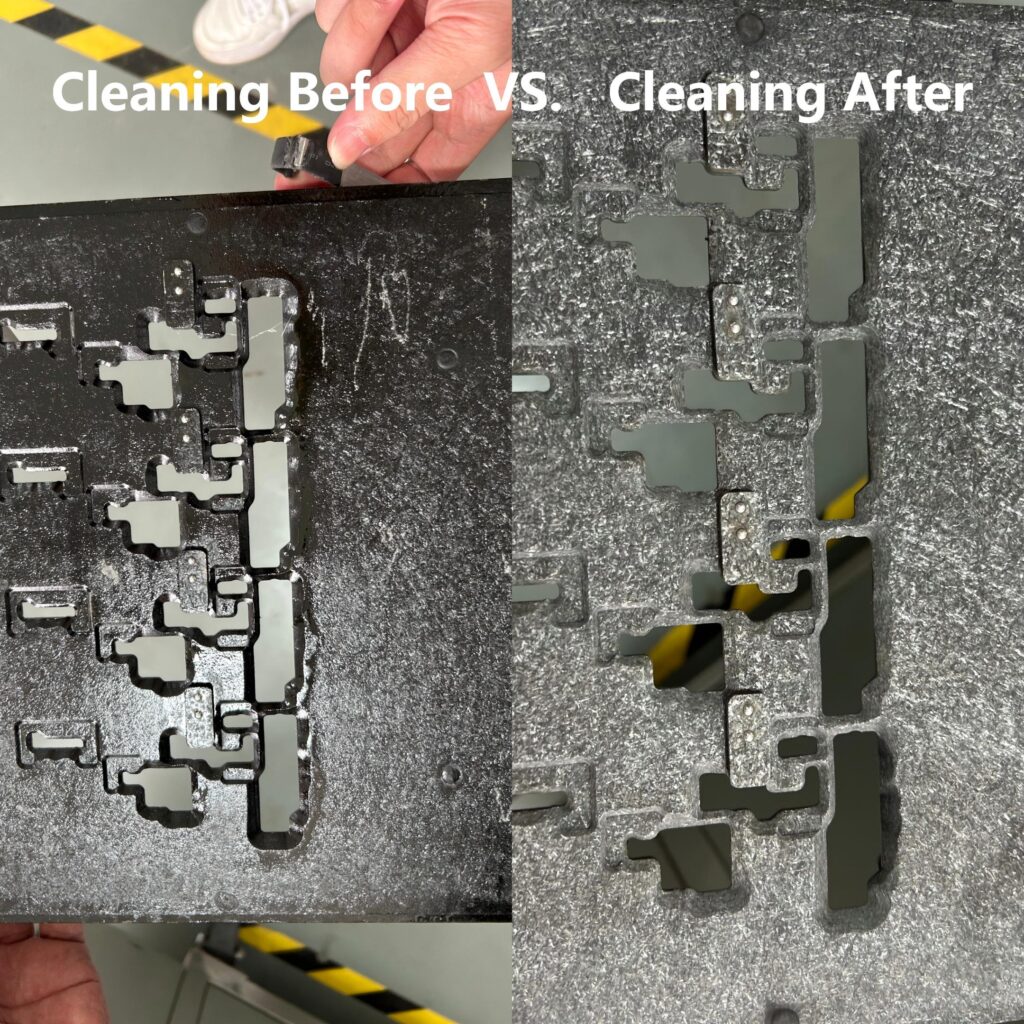
Over time, flux residue, solder balls, and dust accumulate on wave soldering pallets and reflow fixtures. If left uncleaned, this “invisible enemy” can lead to poor grounding, PCB misalignment, and increased defect rates.
1. Why Manual Cleaning Isn’t Enough Anymore
For years, many workshops relied on manual scrubbing with brushes and solvents. However, as components get smaller and boards more complex, manual cleaning falls short:
Inconsistency: Humans can’t reach every micro-groove of a complex fixture.
Damage Risk: Harsh manual scrubbing can damage the expensive composite materials of the pallets.
Safety Hazards: Workers are exposed to volatile organic compounds (VOCs).
2.The Benefits of an Automated SMT Fixture Cleaning Machine
Investing in an automated cleaning system is no longer a luxury—it’s a necessity for high-quality production. Here is how it transforms your facility:
Consistent Reliability: High-pressure spray systems and specialized nozzles ensure that 100% of flux residue is removed from every corner of the fixture.
Extended Fixture Lifespan: Gentle yet effective cleaning agents prevent the degradation of pallet materials, saving you thousands in replacement costs.
Better SMT Yield: Clean fixtures mean better PCB seating and accurate soldering, directly reducing your DPMO (Defects Per Million Opportunities).
Environmental Compliance: Modern machines feature closed-loop filtration systems that recycle water and cleaning chemistry, reducing waste.
3. What to Look for in a Quality Cleaning System?
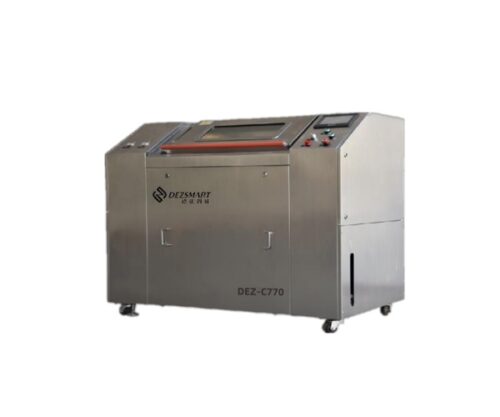
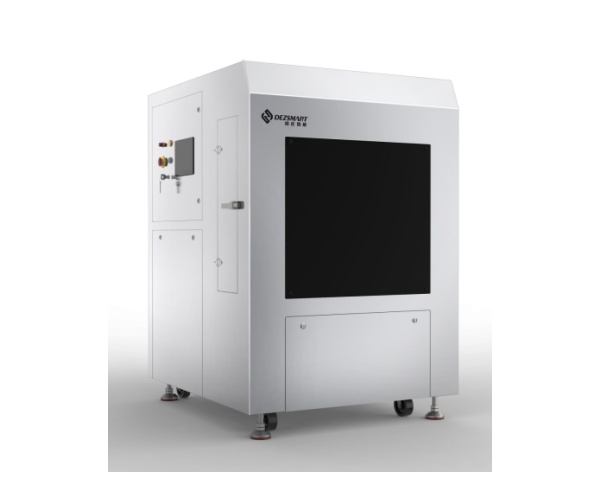
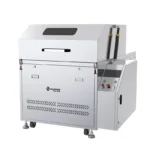
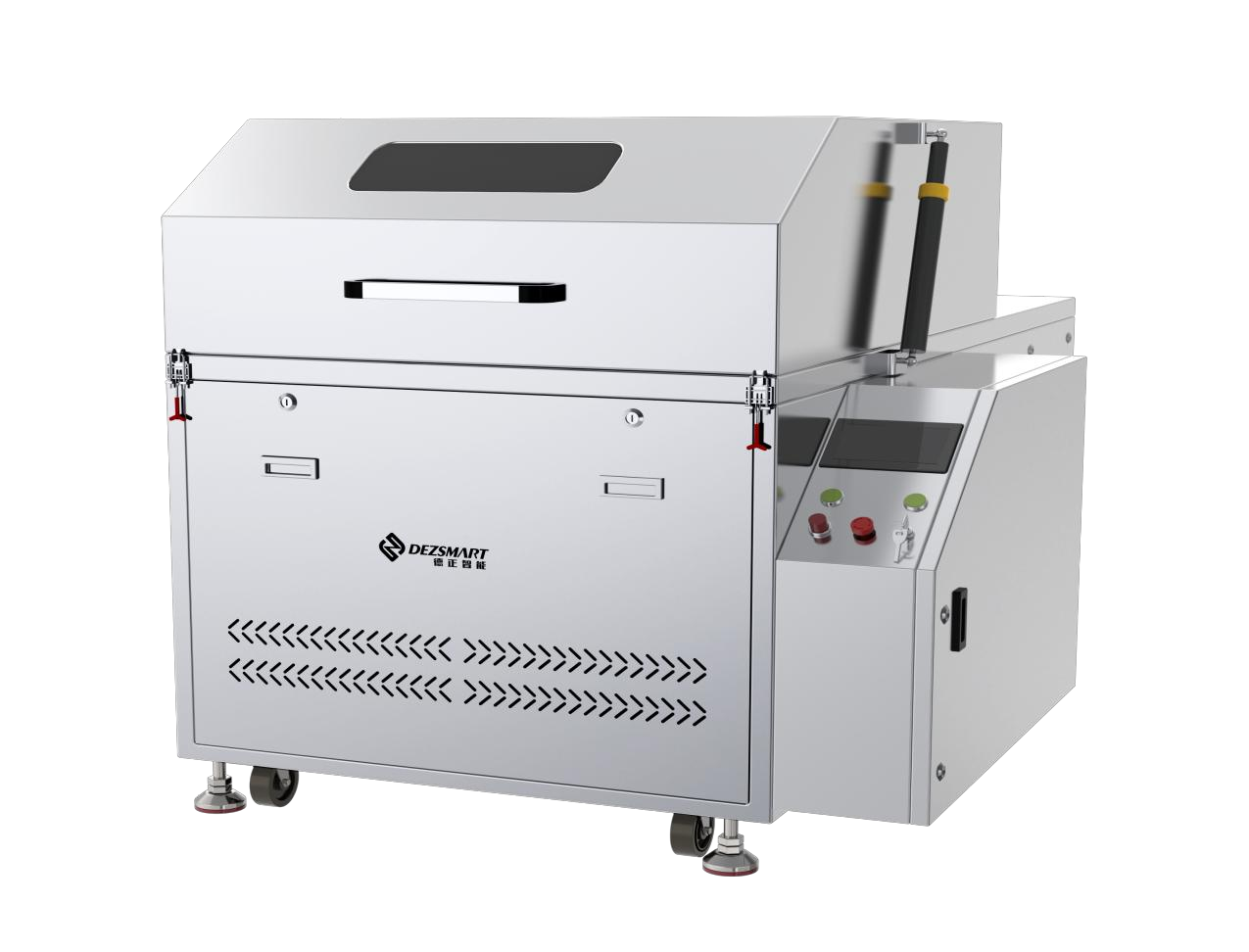
When choosing DEZ-C756 Fixture cleaning machine for your SMT line, consider these features:
High-Pressure Spray Technology: The 720-degree rotating, all-around spray spray ensures comprehensive cleaning, enabling large batch sizes and significant labor savings.
Intelligent Cleaning process: It integrates cleaning, rinsing, air-drying, and drying functions. Addition and removal of rinse fluid, as well as cleaning and rinsing times, can be set via the human-machine interface,PLC control with a touch screen for easy operation.
Conclusion: A Clean Start for Every Batch
Your SMT fixtures are the foundation of your production process. By automating your cleaning workflow, you aren’t just cleaning “tools”—you are protecting your product quality and your bottom line.
4.FAQ:
Q1:What items can be cleaned in DEZ-C756 Automatic Fixture cleaning machines?
A1:In addition to SMT jigs and reflow oven trays, they can clean:
Condensers (to remove rosin/flux buildup).Wave soldering fingers/claws.Squeegees.Misprinted PCBs.
Q2: Why do jigs sometimes develop white residue (whitening) after cleaning?
A2:High Concentration: The detergent ratio might be too high. Usually, a concentration of 10% – 20% is recommended.
Insufficient Rinsing: Residual detergent dries on the surface, forming white spots.
Material Reaction: Lower-quality composite stone jigs may react chemically with highly alkaline detergents.
Q3: What are the common reasons for poor cleaning results?
A3:Low Spray Pressure: Check for pump issues or clogged nozzles.
Inadequate Temperature: Water-based cleaning usually performs best at 50°C – 70°C.
Short Cycle Time: Thick, cured rosin requires longer cycle times.
Saturated Solution: The cleaning fluid has reached its oil-holding capacity and needs to be replaced