










In today’s electronics manufacturing landscape, PCBA designs are becoming increasingly complex due to the rise of 5G communications, AI servers, and automotive electronics. The prevalence of high-density packaging and ultra-miniature chips (as small as 0.6×0.6mm) has pushed the requirements for rework equipment to the limit. Traditional manual rework can no longer meet the yield demands of modern precision manufacturing.
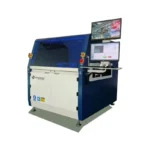
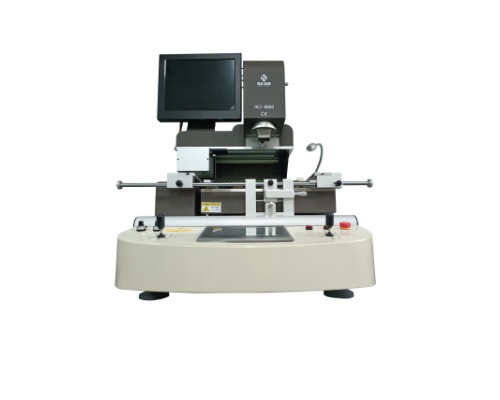
In this post, we’ll explore how the DEZ-R850 Fully Automatic Precision Optical BGA Rework Station solves the core pain points of high-end repair through cutting-edge technology.
1. Sub-Micron Alignment: Challenging the 0.6mm Limit
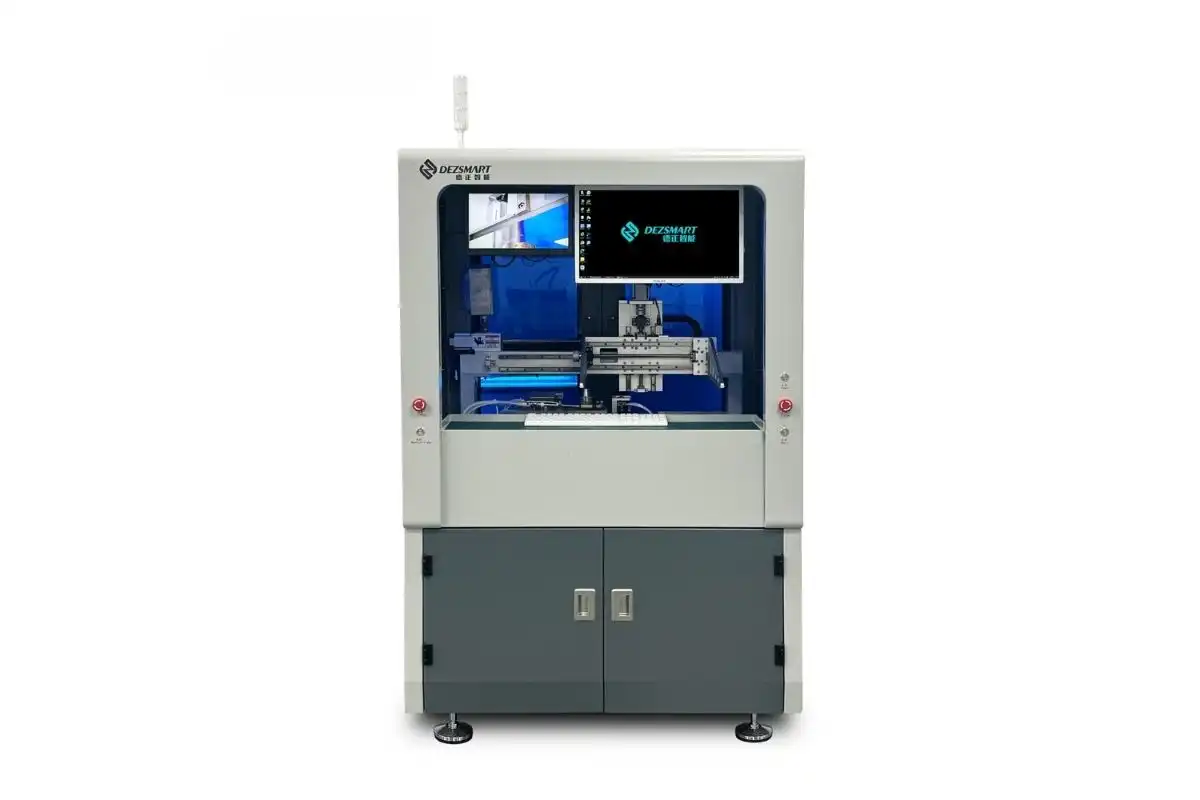
In BGA rework, alignment precision directly dictates the success rate of the secondary soldering process. The DEZ-R850 is equipped with an HDMI microscope-grade ultra-HD CCD optical alignment system, achieving a mounting accuracy of ±0.01mm.
Comprehensive Observation: The system supports automatic X and Y-axis movement with “fixed-point observation.” For large-scale chips (up to 100x100mm), operators can quickly toggle between the four corners and the center. This ensures that even when magnified, the alignment remains crystal clear, eliminating visual blind spots.
Versatile Capability: From microscopic 0.6×0.6mm sensors to massive 100x100mm high-performance processors, the R850 handles them all with ease.
2. Triple-Zone Independent Heating: The Science of Thermal Management
The biggest enemy of PCBA during heating is warpage caused by uneven thermal distribution. The DEZ-R850 utilizes a 7.2KW hybrid heating solution to balance speed and safety:
Triple-Zone Strategy: It combines a 1.6KW top heater (Hot Air + IR hybrid), a 1.2KW bottom heater (dual-channel hot air), and a massive 4.2KW infrared (IR) preheater.
Ceramic IR Technology: The bottom uses imported ceramic heaters to rapidly raise the overall PCB temperature. This reduces the thermal gradient and prevents physical deformation on large boards (up to 450x570mm).
PID Closed-Loop Control: Integrated with high-precision K-type thermocouples, temperature fluctuations are kept within ±1°C. The system displays both “Target” and “Actual” curves in real-time, which is essential for establishing IPC-compliant thermal profiles.
3. “Zero-Pressure” Mounting: Protecting Fragile Pads
As PCB layer counts increase, solder pads become more delicate. The DEZ-R850’s mounting head features a built-in pressure sensing device that constrains mounting pressure to within 10 grams.
This “Zero-Pressure” technology ensures that solder balls are not crushed during placement—preventing solder bridging (shorts) and protecting the fragile substrate from mechanical stress. Combined with Laser Red Dot Positioning, operators can achieve rapid board setup and origin locating.
4. Automation for Industry 4.0
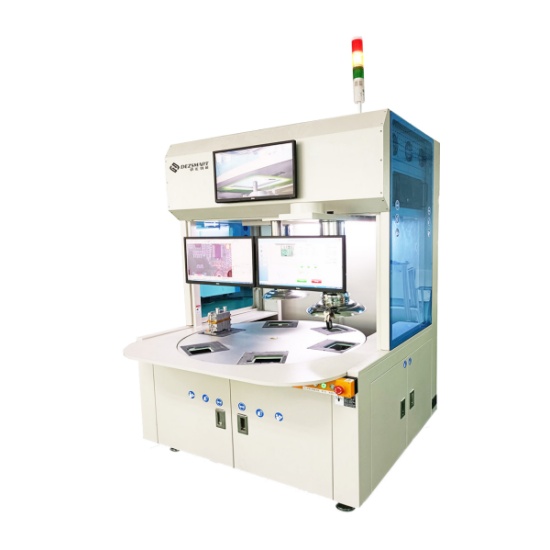
The DEZ-R850 is more than just a machine; it is an intelligent rework cell:
One-Touch Operation: Automated desoldering, pickup, placement, and soldering.
Real-Time Solder Monitoring (Optional): Via an external camera, engineers can visually monitor the melting phase of the solder balls, providing invaluable data for perfecting thermal profiles.
Safety First: Built-in dual over-temperature protection, automatic power-off, and emergency stop functions ensure the safety of both the operator and the expensive hardware.
FAQ:
Q1: What sizes of PCBs and chips can the DEZ-R850 handle? A: The R850 offers extreme compatibility. It supports chip sizes from 0.6×0.6mm up to 100x100mm. The standard maximum PCB size is 450x570mm, but we also offer customization for oversized motherboards.
Q2: Why is triple-zone heating superior to dual-zone heating? A: Triple-zone heating adds a powerful 4.2KW bottom IR preheater. When working with thick boards or lead-free (high melting point) solder, large-area preheating prevents PCB warping and “popcorning” effects. It ensures uniform thermal stress, which is the standard for professional-grade rework.
Q3: What is the practical benefit of “Zero-Pressure” mounting? A: When reworking Fine Pitch components, even slight downward pressure can cause solder paste or balls to squeeze and bridge. The R850’s pressure control (under 10g) ensures the nozzle makes gentle contact, significantly improving the stability and repeatability of the soldering process.